

How To Choose The Right Burr Coffee Grinders
Let’s be honest for a second: your $3,000 espresso machine is only as good as the coffee entering it. I’ve spent years behind the bar and in home kitchens, watching people pour their hearts (and wallets) into high-end gear, only to pull shots that taste sour, bitter, or watery. The culprit is almost always the grinder. If you are chasing that perfect espresso extraction—where the syrup flows like warm honey and the crema holds its structure for minutes—you need to stop treating your grinder like an accessory. It is the engine of your entire coffee routine.
Our Top Picks
Affiliate disclosure: if you buy through these links, we may earn a commission at no extra cost to you.
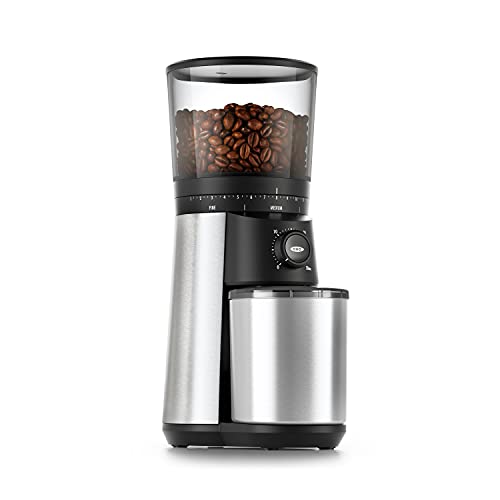
Table of Contents

Quick Answer
To achieve consistent espresso extraction, you need a flat or conical burr grinder capable of producing extremely fine, uniform particles with minimal "fines" (dust) and "boulders" (chunks). Look for a machine with a high-quality motor that doesn't overheat, precise stepless micro-adjustments to dial in your dose, and a low-retention chute so you don't waste precious coffee when switching beans. The burr material matters less than the geometry and alignment, but steel burrs generally offer better longevity than ceramic for daily heavy use.
The Grind Consistency Myth
When we talk about "consistency" in espresso, we aren't just talking about the size of the particles; we are talking about the uniformity of that size. Espresso relies on pressure—usually 9 bars—to force water through a compacted puck of coffee. If your grinder produces a mix of boulders (large chunks) and fines (dust), you get channeling. The water finds the path of least resistance, rushing through the fines while ignoring the boulders. This results in uneven extraction: sour notes from under-extracted boulders mixed with harsh, bitter compounds from over-extracted fines.
A high-quality grinder uses precision-engineered burrs to shear the coffee bean into particles that are as identical as possible. Think of it like a chef’s knife versus a dull butter knife; one slices cleanly through the cell structure of the bean, releasing aromatics evenly, while the other crushes and tears, creating chaos in your cup. You don't need the most expensive grinder on the market to get good consistency, but you do need one that prioritizes burr geometry over flashy aesthetics.
Burr Geometry: Flat vs. Conical
The two main types of burrs are flat and conical. Each has a distinct flavor profile and mechanical advantage. Flat burrs consist of two parallel rings with sharp teeth. They tend to produce a more uniform particle distribution, which translates to higher clarity and brightness in the cup. If you love fruity, tea-like notes in your light-roast espresso, flat burrs are often the go-to.
Conical burrs, shaped like a cone inside a ring, generally create a broader particle distribution with more fines. This can add body and sweetness to the espresso, making it feel heavier on the palate. They are also typically quieter and generate less heat than flat burrs because they spin at lower RPMs (revolutions per minute). For a home barista pulling shots of medium-dark roasts where body is king, a high-quality conical grinder is often the more practical choice.
The Importance of Stepless Adjustments
p>In espresso, precision is everything. You might need to adjust your grind size by less than 0.1mm to correct for changes in humidity or bean density. Grinders with "stepped" adjustments move in fixed increments (like a gear shifter). While these are great for beginners learning the basics, they can be frustrating when you are trying to fine-tune a shot that is pulling too fast."Stepless" grinders allow for infinite adjustment within their range. This gives you the granular control needed to dial in your yield and timing perfectly. When you turn the dial on a stepless grinder, you should feel smooth resistance, not clicking or grinding metal-on-metal. A good stepless mechanism locks firmly in place so that vibration from your espresso machine doesn't shift your grind setting mid-shot.
Motor Power and Heat Management
A weak motor will struggle to push beans through the burrs, leading to inconsistent grinding and overheating. Heat is the enemy of coffee flavor; if your grinder gets too hot during a session, it can "cook" the coffee grounds before they even hit your portafilter, altering the flavor profile. Look for grinders with motors rated at least 300-400 watts for home use.
DC (direct current) motors are generally preferred over AC motors for home espresso grinders because they offer higher torque and run cooler. They also tend to be quieter, which is a nice bonus if you are making coffee early in the morning while someone else is still sleeping. Avoid "blade" grinders or cheap mini-grinders marketed as compact solutions; they cannot maintain the consistency required for espresso.
Retention and Chute Design
Grinder retention refers to the amount of coffee that gets stuck inside the grinder after you grind. In a high-retention grinder, you might lose 3-5 grams of coffee every time you switch beans. This is not just wasteful; it’s annoying. You’ll end up with stale grounds mixing with your fresh batch, making dialing in nearly impossible.
Modern espresso grinders often feature "low retention" chutes or single-dose designs that allow almost all the coffee to exit the burrs and fall into your portafilter. Some even come with tools to clear the chute between doses. If you buy a grinder with high retention, be prepared to purge (grind out) several grams of coffee every time you change beans. For daily drinkers sticking to one bean, this matters less, but for enthusiasts who rotate origins weekly, low retention is a game-changer.
Frequently Asked Questions
Do I really need an espresso-specific grinder if I also pour over?
Yes. Espresso requires a much finer, more consistent grind than pour-over. A grinder that is "good enough" for drip coffee will likely produce too many boulders for espresso, resulting in sour, weak shots. Conversely, using an espresso grinder for coarse French press can lead to over-extraction and sludge.
What is the difference between DC and AC motors?
DC motors are typically quieter, run cooler, and offer higher torque for consistent grinding. AC motors are often louder and can generate more heat, but they are sometimes found in older or commercial-grade machines.
How often should I clean my espresso grinder?
You should backflush your grinder with blind baskets weekly to remove grounds from the chute. Deep cleaning with burr removal and a brush should happen monthly, or whenever you switch bean types significantly.
Can I use a conical burr grinder for espresso?
Absolutely. Many of the most respected home espresso grinders use conical burrs. They are excellent at producing body and sweetness, which pairs well with many espresso blends.
What is "stepless" adjustment?
Stepless adjustment allows for infinite, continuous changes to the grind size without fixed increments. This provides the micro-adjustments needed to perfectly dial in espresso shots.
🛒 Relevant Products for This Topic
Affiliate disclosure: if you buy through these links, we may earn a commission at no extra cost to you.
OXO Brew Conical Burr Electric Coffee Bean Grinder - 12 Oz Capacity
$109.95
View Product Details →SHARDOR Conical Burr Espresso Coffee Grinder Electric with Precision Timer...
$79.98
View Product Details →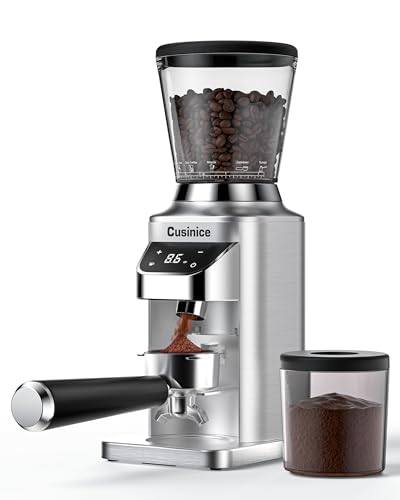
Cusinice Conical Burr Coffee Grinder for Home Use, Anti-Static Espresso...
$69.98
View Product Details →

