

Fellow Burr Grinders vs Shardor Burr Grinders: Which Should You Buy in 2026
Choosing the right coffee grinder is arguably the single most impactful decision you can make for your home brew quality. Whether you are pulling tight espresso shots or brewing a delicate pour-over, the consistency of your grind dictates your extraction, dose, and final yield. In this comparison, we are looking at two very different approaches to grinding: the premium, versatile engineering of Fellow burr grinders versus the budget-friendly, entry-level options from Shardor. This isn't just about price; it's about understanding what you get when you invest in build quality, burr geometry, and motor torque.
This article is for the home barista who wants to move beyond pre-ground coffee but isn't ready to drop a fortune on industrial equipment. If you are curious about whether the $200 Fellow Opus justifies its price tag over a $40 Shardor grinder, or if the Fellow Ode Gen 2’s flat burrs truly offer a flavor advantage for your morning drip, you’re in the right place. We’ll cut through the marketing noise to look at grind consistency, material quality, and real-world performance so you can find the gear that actually changes your morning ritual.
Affiliate disclosure: if you buy through these links, we may earn a commission at no extra cost to you.

Table of Contents
- Models in this comparison
- Quick Verdict
- About Fellow Burr Grinders
- About Shardor Burr Grinders
- Head-to-Head: Grind Consistency and Burr Design
- Head-to-Head: Build Quality and User Workflow
- Head-to-Head: Price-to-Performance Ratio
- Who Should Choose Fellow Burr Grinders?
- Who Should Choose Shardor Burr Grinders?
- Our Verdict
- Frequently Asked Questions
- Sources & References
Models in this comparison
Affiliate disclosure: if you buy through these links, we may earn a commission at no extra cost to you.

Quick Verdict
Choose Fellow Burr Grinders if...
- You want a grinder that genuinely improves extraction quality across multiple brew methods, from espresso to cold brew.
- Build quality, grind consistency, and workflow matter more to you than the lowest possible price tag.
- You are willing to invest in precision engineering, like the 48 mm conical burrs in the Opus 2 or the 64 mm flat burrs in the Ode Gen 2, for better flavor clarity.
Choose Shardor Burr Grinders if...
- Your budget is strictly capped around the $40 mark and you need a functional electric grinder for basic home brewing.
- You are a casual drinker who doesn't need stepless adjustment or espresso-grade precision.
- You prioritize basic convenience and automatic operation over fine-tuning your dose and yield.
| Factor | Fellow Burr Grinders | Shardor Burr Grinders |
|---|---|---|
| Relative Cost | Premium tier: $199.95 for the Opus 2; $399.95 for the Ode Gen 2 (caffeinepark.com) | Budget tier: $39.99 for the SHARDOR 2.0 (caffeinepark.com) |
| Best For | Home brewing enthusiasts seeking versatility across espresso, pour-over, and cold brew; users prioritizing grind consistency and build quality | Budget-conscious users needing consistent results for general brewing methods from espresso to French press |
| Setup Difficulty | Plug-and-play with thoughtful workflow design; minimal setup required for immediate use | Simple plug-and-play operation with removable parts for easy cleaning |
| Reliability | Built with premium materials including stainless steel conical burrs and robust motor torque (6 Nm for Opus) | Functional design with overheat protection and stainless steel housing, targeted at entry-level durability |
| Key Advantage | Superior grind consistency and versatility (48 mm conical burrs with stepless adjustment on Opus 2; 64 mm flat burrs on Ode Gen 2) | Exceptional price-to-performance ratio for entry-level burr grinding |
| Main Drawback | Higher initial investment compared to budget alternatives | Limited grind settings (16 settings on SHARDOR 2.0) and basic build quality compared to premium options |
About Fellow Burr Grinders
Fellow has carved out a serious reputation in the specialty coffee space, not just for sleek industrial design, but for delivering grind consistency that actually translates to better extraction. Their lineup, anchored by the Opus and Ode series, is built for coffee lovers who want precision without the intimidation factor of commercial-grade equipment. The Fellow Opus 2, for instance, steps up the game with 48 mm stainless steel conical burrs and stepless grind adjustment, giving you the fine-tuning control needed for everything from a tight espresso shot to a coarse cold brew. It’s a versatile machine that doesn’t cut corners on the mechanics that matter most: burr quality and motor torque. For those who lean heavily into manual brewing, the Fellow Ode Gen 2 is a different beast entirely. Priced at $399.95, it utilizes 64 mm uncoated stainless steel flat burrs, which are engineered to highlight clarity and flavor separation in pour-over and drip coffee. Fellow doesn’t just sell you a grinder; they sell you a workflow. Whether it’s the wood lid and metal dial upgrade on the Opus 2 or the precision-focused Ode, the brand prioritizes build quality and grind uniformity over flashy features that don’t impact your cup.About Shardor Burr Grinders
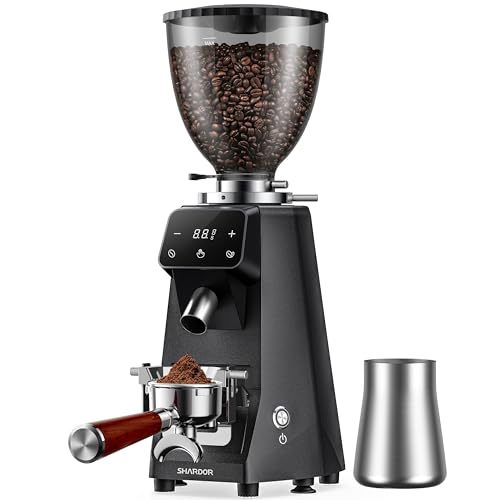
Shardor occupies the budget-friendly end of the spectrum, offering entry-level burr grinding for those who want to move past blade grinders without dropping a few hundred dollars. The SHARDOR Electric Burr Coffee Grinder 2.0, for example, comes in at around $39.99 and provides 16 adjustable grind settings across a flat burr mechanism. It’s a straightforward, no-frills tool designed to grind up to 14 cups of coffee with a 130W motor, making it a practical choice for casual home brewers who need consistent results for general brewing methods. While Shardor grinders lack the premium materials and fine-tuned adjustability of higher-end brands, they deliver on their core promise: affordable, consistent grinding. The 64 mm flat burr models offer a step up in grind capacity, and the conical burr options cater to espresso-leaning users on a tight budget. Shardor isn’t trying to compete with Fellow on build quality or flavor clarity—they’re focused on accessibility. If you’re just starting your journey into specialty coffee and need a reliable grinder that won’t break the bank, Shardor provides a solid foundation, even if it doesn’t offer the same level of nuance for espresso or light-roast pour-overs.Head-to-Head: Grind Consistency and Burr Design
When you are pulling a shot or dialing in a pour-over, the consistency of your grind is the single biggest variable you control. The Fellow Opus 2 utilizes 48 mm stainless steel conical burrs with a stepless grind adjustment, which allows for micro-adjustments that are critical when you are chasing that perfect extraction window. This setup is designed to handle everything from fine espresso to coarse cold brew, offering a versatility that comes from robust engineering. In contrast, the SHARDOR 2.0 employs a flat burr grinding mechanism with 16 adjustable grind settings. While flat burrs can offer a different flavor profile, the SHARDOR’s limited range of settings means you are working with broader buckets of grind size, which can make fine-tuning your dose and yield much harder if you are trying to optimize for a specific brew method. The difference in burr quality and motor torque also plays a role in how consistent the particles are. The Fellow Opus is built with a 6 Nm torque motor and 40 mm conical burrs (in the original Opus model) or 48 mm conical burrs (in the Opus 2), providing the power needed to crush beans evenly without generating excessive heat. This consistency is what separates a muddy, uneven extraction from a clean, balanced cup. The SHARDOR 2.0, priced at $39.99, uses a 130W motor to grind up to 14 cups of coffee. While it delivers consistent results for general brewing, the coarser adjustment increments and lower-tier build materials mean it lacks the precision required for the nuanced adjustments espresso or high-clarity pour-overs demand.Head-to-Head: Build Quality and User Workflow
Your grinder is going to live on your counter, so it needs to feel as good as it brews. The Fellow Opus 2 is positioned as a premium tool, with options like the $249.95 model that includes a wood lid and metal dial, elevating the tactile experience of your morning routine. The design focuses on reduced grind retention and volumetric dosing, which helps streamline your workflow whether you are brewing for one or a group. Fellow’s approach is about creating a machine that integrates seamlessly into a serious home barista’s setup, offering a balance of premium materials and functional design that lasts. On the other hand, the SHARDOR 2.0 is a no-frills, budget-friendly option with a plastic hopper and stainless steel housing. It’s designed for users who need a reliable grinder without the premium price tag, offering removable parts for easy cleaning and overheat protection. While it gets the job done for someone grinding 14 cups of coffee at once, it doesn’t offer the same level of craftsmanship or workflow optimization as the Fellow. If you value the feel of metal dials and the thoughtfulness of a design that minimizes mess, the SHARDOR’s utilitarian approach may feel a bit cheap in comparison, even if it saves you $160 upfront.Head-to-Head: Price-to-Performance Ratio
Price is always the first question, but in coffee gear, it’s really about what you get for your money. The SHARDOR 2.0 sits at $39.99, making it an accessible entry point for anyone looking to move away from blade grinders. For a user who brews standard drip coffee or French press and doesn’t need espresso-level precision, the SHARDOR offers a solid value proposition. You get a flat burr mechanism and 16 settings that cover the basics, which is enough to noticeably improve flavor over a blade grinder. However, if you are serious about dialing in your brew, the Fellow Opus 2 at $199.95 (or $249.95 for the upgraded version) represents a significant jump in performance. You are paying for stepless adjustment, higher-quality burrs, and a motor that can handle the demands of espresso. The Fellow Ode Gen 2, priced at $399.95, takes this further with 64 mm flat burrs optimized for manual brew methods, offering extreme clarity and flavor separation. While the SHARDOR is a great budget tool, the Fellow grinders are investments in quality that genuinely change your morning coffee, offering a level of control and consistency that budget grinders simply cannot match.Who Should Choose Fellow Burr Grinders?
If you are a home barista who refuses to compromise on extraction quality, the Fellow lineup is built for you. The Fellow Opus 2, with its 48 mm stainless steel conical burrs and stepless grind adjustment, is the sweet spot for anyone serious about pulling espresso shots or dialing in pour-overs. The stepless adjustment allows for micro-tweaks in dose and yield that can mean the difference between a sour, under-extracted shot and a balanced, sweet cup. If your morning ritual involves manual brew methods like pour-over or drip, the Fellow Ode Gen 2 with its 64 mm flat burrs is engineered for flavor clarity and consistency, delivering the kind of precision that makes light roasts sing.
Fellow grinders are for the coffee lover who values workflow and build quality. The Opus 2’s 6 Nm torque motor and reduced grind retention mean less waste and more consistency batch after batch. If you want a grinder that looks as good on your counter as it performs in your cup—and you’re willing to invest in a tool that will last years—the Fellow Ode Gen 2 (priced at $399.95) or the Opus 2 (starting at $199.95) are the choices that genuinely change your morning.
Who Should Choose Shardor Burr Grinders?
The Shardor burr grinders, like the SHARDOR Electric Burr Coffee Grinder 2.0, are for the budget-conscious brewer who wants to move beyond blade grinders without breaking the bank. At $39.99, the Shardor offers 16 adjustable grind settings and a flat burr mechanism that provides consistent results for general brewing. If you’re just starting your specialty coffee journey or you brew mostly drip coffee and French press, the Shardor delivers solid performance for the price.
Shardor is a practical choice for users who need a reliable, no-frills grinder for everyday use. With a 130W motor and a 4.5 oz bean hopper, it’s capable of grinding up to 14 cups of coffee, making it a good fit for small households or office use. While it may not have the stepless adjustment or premium materials of a Fellow, the Shardor gets the job done for those who prioritize value and simplicity over fine-tuned espresso precision.
Our Verdict
Let’s cut through the noise: you are comparing two fundamentally different tiers of equipment. The Fellow Opus 2 and the SHARDOR 2.0 sit at opposite ends of the price-to-performance spectrum, and expecting them to perform identically is like comparing a precision scalpel to a butter knife. If your budget is tight and you just need something that works for a standard drip brew or a basic French press, the SHARDOR 2.0 at roughly $40 delivers consistent enough results for the casual drinker. It’s a solid entry point into burr grinding without breaking the bank.
However, if you are serious about extraction quality, grind consistency, and versatility—especially if you plan to pull espresso shots or dial in pour-overs—the Fellow Opus 2 is the only logical choice. The jump to $200 buys you a 48 mm conical burr system with stepless adjustment, a significantly more robust motor, and the kind of grind uniformity that actually unlocks flavor clarity. For the home barista who cares about dose, yield, and shot timing, the Fellow isn’t just a grinder; it’s a tool that respects the coffee. Don’t buy the SHARDOR if you want to explore the nuances of specialty coffee; buy the Fellow if you want to master them.
Frequently Asked Questions
Can the SHARDOR 2.0 handle espresso grinding effectively?
The SHARDOR 2.0 features 16 adjustable grind settings and a flat burr mechanism, which allows it to reach finer grinds suitable for espresso. However, with only 16 settings, you have less precision for dialing in a specific shot timing compared to grinders with more granular control. It’s a solid entry-level option for budget-conscious users, but don’t expect the same level of extraction consistency you’d get from a higher-end machine.
What’s the real difference between the Fellow Opus and the Opus 2?
The Fellow Opus 2 upgrades the burr size from 40 mm to 48 mm stainless steel conical burrs and introduces stepless grind adjustment, which offers smoother transitions between grind sizes—critical for nailing espresso extraction. The standard Opus has 41+ settings, while the Opus 2 refines that versatility with better build quality, especially if you opt for the version with the wood lid and metal dial. Both are capable across brew methods, but the Opus 2 feels more refined for daily workflow.
Is the Fellow Ode Gen 2 worth the $400 price tag for pour-over coffee?
If you’re serious about manual brew methods like pour-over or drip, the Ode Gen 2’s 64 mm flat burrs are designed to deliver high clarity and flavor separation. It’s specifically optimized for these methods rather than espresso. For coffee lovers who prioritize taste profile and consistency over raw power, it’s a genuine game-changer. Just know it’s not intended for espresso brewing.
How does the SHARDOR 2.0’s 130W motor compare to Fellow’s torque-based motors?
The SHARDOR 2.0 relies on a 130W motor to grind up to 14 cups of coffee, which is adequate for general home use. Fellow, on the other hand, emphasizes torque (6 Nm in the original Opus) to maintain consistent grind speed under load, which helps reduce heat transfer and fines generation. While SHARDOR gets the job done at a fraction of the price, Fellow’s approach prioritizes grind quality and durability over raw wattage.
Should I buy a grinder that looks good on my counter but brews mediocre coffee?
Not if you care about your cup. Some grinders prioritize aesthetics over performance, delivering inconsistent grind distribution or excessive fines that lead to bitter or weak extractions. The Fellow Ode Gen 2 and Opus 2 are built to perform, not just look pretty. The SHARDOR 2.0 is honest about its budget positioning—it’s functional and affordable, but don’t expect it to compete with Fellow’s build quality or grind precision. Choose based on what actually improves your extraction, not just your kitchen decor.


