

Shardor Burr Grinders Vs Fellow Burr Grinders
If you’ve ever stood in your kitchen, staring at a bag of single-origin beans, wondering why your morning brew tastes more like "dusty bitterness" than the bright, floral notes promised on the label, you’ve likely encountered the grind consistency problem. In the world of specialty coffee, your grinder is the gatekeeper of flavor. It dictates the particle size distribution, which in turn controls your extraction. If your grinder produces a messy mix of boulders and fines, your espresso will channel and your pour-over will taste muddy. Choosing between brands like Shardor and Fellow isn't just about picking a pretty machine for your countertop; it’s about deciding how much control you want over your morning ritual.
In this comparison, we are looking at two very different philosophies of coffee preparation. Shardor has carved out a niche by offering feature-packed, budget-friendly grinders—ranging from entry-level electric models to professional-grade 64mm flat burr setups—that provide a low-cost entry point into the world of precision grinding. Fellow, on the other hand, represents the design-forward, enthusiast-driven side of the spectrum, focusing on streamlined workflows and high-end aesthetics. Whether you are a budget-conscious brewer looking to move away from cheap blade grinders or a dedicated home barista chasing laboratory-level control, understanding the trade-offs between these two brands is essential to finding the right tool for your brew style.
Affiliate disclosure: if you buy through these links, we may earn a commission at no extra cost to you.

Table of Contents
- Models in this comparison
- Quick Verdict
- About Shardor Burr Grinders
- About Fellow Burr Grinders
- Grind Precision and Extraction Potential
- Build Quality and Daily Workflow
- Who Should Choose Shardor Burr Grinders?
- Who Should Choose Fellow Burr Grinders?
- Our Verdict
- Frequently Asked Questions
- Sources & References
Models in this comparison
Affiliate disclosure: if you buy through these links, we may earn a commission at no extra cost to you.

Quick Verdict
Choose Shardor Burr Grinders if...
- You are looking for an affordable entry point into burr grinding to move away from inconsistent blade grinders.
- You want feature-rich models, such as the Professional 64mm with 100 settings, that offer high-end specs like anti-static systems and precision timers at a lower price point.
- You need a variety of specialized options, from compact conical burr grinders for daily drip to precision-focused espresso models.
Choose Fellow Burr Grinders if...
- You prioritize a specific design aesthetic and workflow that fits a modern, minimalist coffee bar.
- You are looking for specialized performance, such as the Gen 2 64mm flat burr's focus on grind consistency for filter coffee or the Opus 2's versatility.
- You are willing to invest in a brand known for specialized single-dose and brew-method-specific engineering.
| Factor | Shardor Burr Grinders | Fellow Burr Grinders |
|---|---|---|
| Primary Focus | Entry-level to mid-range versatility; budget-friendly access to burr grinding. | Premium single-dose and brew-specific performance for enthusiasts. |
| Best For | Beginners moving away from blade grinders or those seeking affordable, feature-rich electric options. | Specialty coffee lovers seeking high-end grind consistency and aesthetic design. |
| Key Advantage | High feature-to-price ratio (e.g., 100 grind settings on professional models) and diverse lineup. | Precision-engineered burrs (like the 64mm flat burrs in the Ode Gen 2) for superior flavor clarity. |
| Main Drawback | Build quality and long-term reliability may vary compared to high-end enthusiast brands. | Higher price point and specialized focus (some models are not suited for espresso). |
| Price-to-Performance | Excellent for those wanting a low-cost entry point into consistent particle size. | Investment-grade gear for those prioritizing extraction quality and workflow. |
About Shardor Burr Grinders
When you look at the Shardor lineup, it’s clear they are targeting the home barista who wants to bridge the gap between a cheap blade grinder and a high-end professional mill. They’ve carved out a niche by offering feature-packed, budget-friendly tools that focus on the fundamentals: grind consistency and ease of use. For someone moving away from inconsistent blade grinding, Shardor offers an accessible entry point into the world of burr-driven extraction.
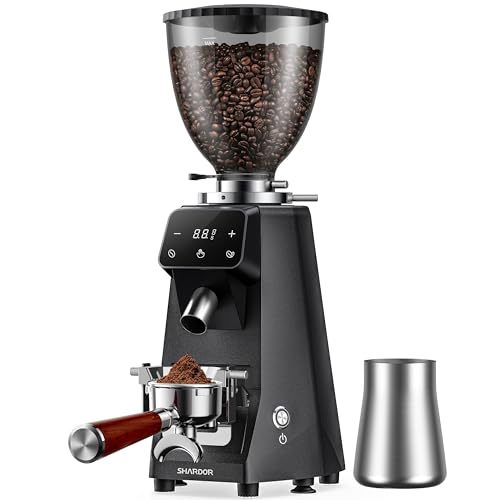
The technical spread across their models is quite broad. For those chasing espresso precision, the SHARDOR Professional 64mm Burr Grinder is a heavy hitter, featuring 100 adjustable grind settings and an all-metal chamber designed to minimize heat. This flat burr design is built to produce uniform grounds, which is critical for reducing channeling and avoiding bitter shots during espresso extraction. On the other end of the spectrum, you have more approachable options like the Electric Burr Grinder 2.0, which offers 16 settings at a much lower price point, or the Professional Conical Burr Grinder with 48 settings for those who want a reliable all-rounder for drip or French press.
In terms of real-world workflow, Shardor focuses heavily on the "quality of life" features that make morning brewing less of a chore. Many of their models include anti-static systems to keep the mess contained and precision timers to help with dosing consistency. While they might not match the heavy-duty build of a boutique enthusiast brand, they provide a solid price-to-performance ratio for users who want a functional, feature-rich grinder without a massive upfront investment.
About Fellow Burr Grinders
Fellow has built a reputation for marrying high-end aesthetic design with serious coffee science. While Shardor focuses on being an accessible entry point, Fellow often targets the enthusiast who views their grinder as a centerpiece of their brewing ritual. Their gear is designed for those who want a "buy once, cry once" experience—machines that look beautiful on a countertop but are engineered to deliver the specific particle size distribution required for modern specialty coffee.
The comparison between Shardor and Fellow often comes down to the specific brewing philosophy of the user. For example, the Fellow Ode Gen 2 64mm Flat Burr Grinder is a specialized tool designed to excel at filter coffee, focusing on clarity and flavor-forward extractions. In contrast, Shardor’s 64mm model offers a broader range of settings that can pivot between espresso and pour-over. Fellow’s gear often leans into the nuances of single-dosing and workflow-specific tasks, aiming to provide the kind of grind consistency that allows a brewer to truly "dial in" a specific bean's profile.
When choosing between these two brands, you are essentially deciding between a versatile, budget-conscious toolkit and a specialized, design-forward precision instrument. Fellow grinders are built for the user who wants to master the nuances of light-roast clarity and clean extractions. If you are looking for a machine that serves as a dedicated partner to your V60 or Chemex, Fellow’s focus on grind uniformity and workflow-centric design makes them a formidable choice for the serious home brewer.
Grind Precision and Extraction Potential
When we talk about the difference between Shardor and Fellow, we are often talking about the fundamental geometry of the burrs. Shardor’s lineup, particularly the Professional 64mm model, leans heavily into the flat burr design. This is a strategic choice for those chasing espresso-level precision. According to The Common Mom, the 64mm flat burr setup provides 100 adjustable settings, allowing for micro-adjustments that can help minimize channeling and prevent bitter shots. This level of control is designed to produce a uniform particle size, which is the holy grail for consistent extraction across different brew methods.
Fellow, on the other hand, often focuses on the nuances of single-dose and ritual-based brewing. While Shardor offers a wide range of settings to cover everything from Turkish to coarse cold brew, Fellow’s designs—like the Ode Gen 2—are often engineered with specific brew profiles in mind. For the espresso enthusiast, Shardor’s flat burr models offer a laboratory-level control that can rival more expensive machines. However, the choice often comes down to whether you want the broad versatility of Shardor's 100-setting range or the specialized, workflow-driven precision found in Fellow's specialized gear.
Build Quality and Daily Workflow
The "morning ritual" factor is where these two brands diverge most sharply in feel. Shardor has positioned itself as a feature-rich, budget-friendly entry point into the world of burr grinding. Their models, such as the Professional Conical Burr Grinder, feature intuitive touchscreens and precision timers to make dosing effortless. For the user who wants a reliable, all-metal chamber and an anti-static system that keeps the kitchen counter clean, Shardor provides a robust, functional experience that punches above its price point. It is built for the person who wants professional-feeling features—like LED timers and 48 to 100 grind settings—without the boutique price tag.
Fellow grinders are often viewed through the lens of aesthetic minimalism and specialized workflow. While Shardor focuses on providing a wide array of settings for various brewing tasks, Fellow's gear is often built for the enthusiast who has a specific "home base" (like pour-over or espresso) and wants a machine that looks as good as it performs. Shardor's builds are substantial and feature-heavy, making them great for those who want a "do-it-all" machine, whereas Fellow focuses on the refined user experience of the modern coffee geek. If you value a larger footprint and a wide range of settings for different brew styles, Shardor's lineup is built to accommodate that variety.
Who Should Choose Shardor Burr Grinders?
If you are looking to step up from a basic blade grinder without committing a massive chunk of your monthly budget to your coffee habit, Shardor is a compelling entry point. These machines are designed for the brewer who wants the benefits of burr grinding—specifically that consistent particle size necessary for better extraction—at an accessible price point.
The Shardor lineup is particularly suited for:
- Budget-Conscious Beginners: For those who want to move away from the unevenness of blade grinders, models like the Electric Burr Grinder 2.0 offer a low-cost entry into more consistent brewing.
- The Espresso Enthusiast on a Budget: If you want to experiment with espresso dialing, the Professional 64mm Burr Grinder offers 100 adjustable settings and an all-metal chamber. This provides the laboratory-level control needed to minimize channeling and avoid bitter shots.
- Versatile Home Brewers: With various models offering everything from 16 to 51 settings, Shardor caters to those who want a single machine to handle a range of tasks, from the fine grind needed for espresso to the coarser settings for French press or drip.
Who Should Choose Fellow Burr Grinders?
Choosing Fellow is a different kind of investment. While Shardor focuses on providing a wide range of features at an entry-to-mid-level price, Fellow is often the choice for those who prioritize aesthetic design, specialized single-dose workflows, and high-end build quality. It is important to note that while Shardor offers a broad spectrum of grinders, Fellow products often target specific niches—like the specialized single-dose focus of the Opus or the brew-quality focus of the Ode.
The Fellow lineup is the better fit for:
- Design-Forward Enthusiasts: If your coffee gear is a centerpiece of your kitchen, Fellow’s modern, minimalist aesthetic is hard to beat.
- The Single-Dose Purist: For those who buy fresh beans in small quantities and want to minimize retention (the coffee left sitting in the grinder), Fellow’s specialized designs are built to keep every gram of coffee fresh and ready for immediate use.
- The Precision Brewer: Users looking for highly specialized performance—such as the unique grind profiles offered by the Ode series—will find that Fellow focuses heavily on the relationship between burr geometry and flavor clarity.
Our Verdict
Choosing between Shardor and Fellow isn't just about comparing two brands; it’s about deciding where you want to sit on the spectrum of coffee brewing. Because these brands target different segments of the market, the "better" grinder depends entirely on your morning ritual and your willingness to invest in the nuances of extraction.
If you are looking for an entry point into the world of burr grinding without breaking the bank, Shardor is the clear winner. They offer a massive range of tools—from the budget-friendly Electric Burr Grinder 2.0 to the high-spec Professional 64mm model—that allow you to move away from the inconsistency of blade grinders. Shardor is perfect for the brewer who wants a functional, feature-rich machine that handles the basics of espresso and drip with ease. If you want 100 adjustable settings and an all-metal build for a fraction of the price of boutique brands, the Shardor Professional 64mm is a powerhouse for the price-conscious enthusiast.
However, if you are looking to move from "good coffee" to "specialty coffee," Fellow is the direction you’ll likely head. While Shardor focuses on providing a wide array of affordable options, Fellow focuses on the aesthetic and the precision-obsessed single-dose workflow. The Fellow Ode series, for instance, is designed for those who prioritize grind consistency and clarity for pour-over and filter coffee above all else.
The Bottom Line:
- Buy Shardor if: You want the best price-to-performance ratio. You need a versatile machine that can handle everything from espresso to French press without a massive upfront investment. It is the smart choice for the practical home barista.
- Buy Fellow if: You are a dedicated filter coffee enthusiast or a design-conscious brewer who wants a specialized, high-end tool for specific brew methods.
If you''re just starting your journey, go with Shardor. You'll get the consistent particle size you need to improve your extraction right out of the box, leaving you more room in your budget to invest in better beans.
Frequently Asked Questions
What is the main difference between conical and flat burr grinders?
It often comes down to your preferred brew style and the flavor profile you're chasing. Conical burrs are frequently noted as reliable all-rounders for daily use, offering a great balance for various methods. Flat burrs, like those found in the SHARDOR Professional 64mm model, are often favored by espresso enthusiasts because they can produce more uniform grounds with minimal heat, helping to reduce channeling and bitter shots during extraction.
Can I use a Shardor grinder for both espresso and pour-over?
Yes, many models in the Shardor lineup are designed with versatility in mind. For example, the SHARDOR Professional 64mm Burr Grinder features 100 adjustable settings, making it suitable for everything from fine espresso to coarse cold brew. When choosing, consider whether you want a specialized tool for one method or a versatile machine that can handle a variety of brew styles.
Why does grind consistency matter so much for my coffee?
Consistency in particle size is the primary factor in improving flavor extraction. If your grind is uneven, you'll end up with "fines" (tiny particles) and "boulders" (large particles) in the same batch. This leads to uneven extraction: the fines can over-extract and taste bitter, while the larger particles under-extract and taste sour. A quality burr grinder aims to produce a uniform particle size to ensure every grain of coffee extracts at the same rate.
Is it worth upgrading from a blade grinder to a burr grinder?
Absolutely. If you are looking to improve your morning cup, moving from a blade grinder to a burr grinder is one of the most impactful changes you can make. Burr grinders provide much more consistent particle size than blade grinders, which directly improves the flavor extraction across espresso, pour-over, and French press methods. It is the difference between a "hit or miss" cup and a repeatable, delicious brew.


