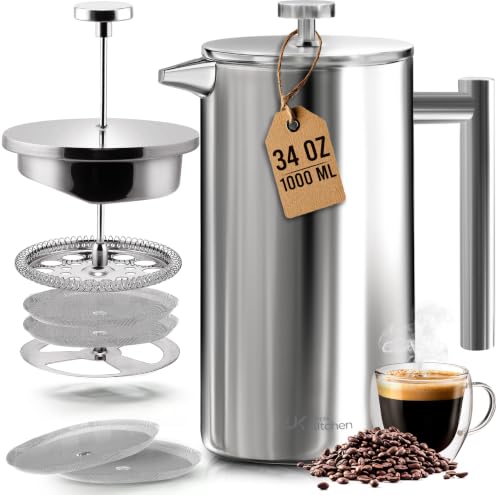
Drip Coffee Makers Vs French Press Which Should
Drip coffee makers and French presses can both make excellent coffee, but they ask very different things of the person using them. One is built around repeatability and low-effort volume. The other puts more of the brew in your hands, from the grind size to the plunge. Choosing between them is less about which method is universally “better” and more about which one matches the way you actually drink coffee.
This comparison is for anyone deciding between an automatic brewer and a French press for daily coffee, a shared kitchen, or a better morning routine. We’ll look at flavor, consistency, cleanup, batch size, workflow, and the features that matter more than a machine’s cup-count label.
Affiliate disclosure: if you buy through these links, we may earn a commission at no extra cost to you.


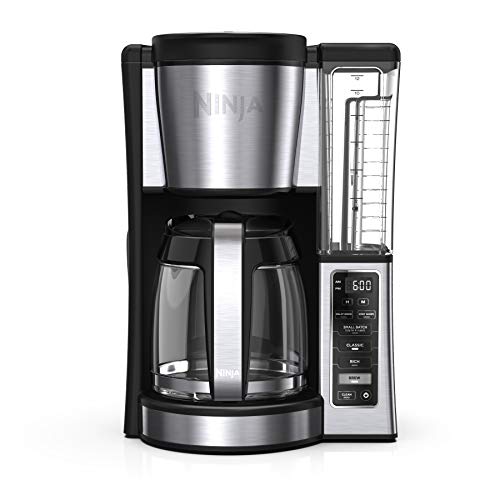
Table of Contents
- Our Top Picks
- Quick Verdict
- About Drip Coffee Makers
- About French Press
- Head-to-Head: Flavor and Mouthfeel
- Head-to-Head: Consistency and Control
- Head-to-Head: Convenience and Daily Workflow
- Head-to-Head: Batch Size and Serving
- Head-to-Head: Heat Management and Holding Coffee
- Who Should Choose Drip Coffee Makers?
- Who Should Choose French Press?
- Our Verdict
- Frequently Asked Questions
- Sources & References
- Relevant Products for This Topic
Our Top Picks
Affiliate disclosure: if you buy through these links, we may earn a commission at no extra cost to you.
Quick Verdict
Choose Drip Coffee Makers if...
- You want push-button brewing and a repeatable result.
- You regularly make coffee for several people or want a larger batch ready at once.
- You prefer a cleaner, lighter-bodied cup with less sediment and fewer oils.
Choose French Press if...
- You prefer a rich, full-bodied cup with more coffee oils.
- You enjoy controlling the brew rather than pressing a button and walking away.
- You usually make a smaller batch and do not mind a few extra minutes of hands-on brewing.
| Factor | Drip Coffee Makers | French Press |
|---|---|---|
| Relative Cost | No universal cost winner can be established without comparing specific models and current prices. A drip maker is a complete powered brewing appliance, and total cost may also include paper filters. | No universal cost winner can be established without comparing specific models and current prices. A press is a manual brewer, but grinder and kettle quality still affect the overall setup. |
| Best For | Multi-cup households, advance preparation, and people who want convenient, consistent brewing. | Drinkers who want a distinctive, full-bodied cup and are comfortable managing the brewing process. |
| Setup Difficulty | Low once the machine is configured. Add water and coffee, select the settings if available, and start the brew. | Moderate. You must heat water, measure coffee, manage the steep, and plunge carefully. |
| Reliability | Convenience depends on the machine’s heating, water distribution, controls, and carafe design. More features can mean more variables. | The manual process is straightforward, but consistency depends heavily on grind size, water temperature, steep time, and plunge technique. |
| Key Advantage | Repeatable brewing with useful batch capacity and minimal hands-on work. | Full body and pronounced coffee oils from immersion brewing and a metal filter. |
| Main Drawback | Some models prioritize speed, appearance, or cup capacity over even extraction and heat management. | More sediment and oils in the cup, plus more manual work and a smaller practical batch size. |
About Drip Coffee Makers
A drip coffee maker uses a water reservoir, heating element, filter basket, and carafe to automate the brew. Heated water passes through the ground coffee and into the carafe, usually through a showerhead or similar distribution system. The best machines make this process pleasantly boring: water reaches the coffee evenly, the brew temperature is handled sensibly, and the machine does not require constant intervention.
Drip coffee is generally cleaner and more consistent than French press coffee, especially when brewed through a paper filter. The filter removes more coffee oils and fine particles, which gives the cup a brighter, clearer texture. That can make lighter roasts and delicate flavor differences easier to distinguish, although the final result still depends on the coffee, grind consistency, dose, and the brewer’s control over water.
Capacity is one of drip coffee’s practical strengths. The CoffeeGearHub comparison describes typical French press brewing as suitable for roughly one to four cups, while Kitchenlio places typical drip coffee makers in the approximately four- to twelve-cup range. Cup markings are not always the same as a large café-style mug, but the basic difference remains: drip machines are generally better suited to serving several people or preparing coffee ahead of time.
Features such as programmable timers, brew-size flexibility, pre-infusion, temperature control, mesh or paper filtration, and Wi-Fi connectivity can be useful. They are not automatically signs of a better brewer. Pay particular attention to how the machine distributes water across the coffee bed, whether it supports the batch size you actually brew, and how it keeps coffee hot. A hot plate can be convenient, but holding brewed coffee on heat for too long may damage flavor.
About French Press
French press coffee is an immersion brew. Ground coffee and hot water steep together before the plunger pushes the grounds toward the bottom of the vessel. The process typically takes about four minutes, according to CoffeeGearHub, but the clock is only part of the recipe. Grind size, water temperature, coffee dose, agitation, and the timing of the plunge all influence extraction.
The defining sensory difference is the filter. A French press generally uses a metal mesh filter rather than a paper filter, allowing more coffee oils and fine particles into the cup. The result is usually richer, heavier, and more full-bodied than paper-filtered drip coffee. That texture is the reason many coffee drinkers remain loyal to the method, particularly with coffees that benefit from a rounder, more substantial mouthfeel.
The tradeoff is that a French press is less forgiving of inconsistent technique. Grind too fine and the cup can become muddy or difficult to plunge. Grind too coarse or steep for too little time and the brew may taste thin or underdeveloped. Leaving the coffee in contact with the grounds after plunging can also push extraction further, so serving promptly matters.
A French press rewards attention without requiring professional-level technique. You do not need a complicated recipe to make good coffee, but you do need to participate in the process. For some people, that four-minute pause is part of the pleasure. For others, it is exactly the inconvenience an automatic brewer is meant to remove.
Head-to-Head: Flavor and Mouthfeel
French press is the clear choice if your priority is body. Its immersion method and metal filter allow more coffee oils into the cup, producing a heavier texture and a more rounded, sometimes more intense impression. Fine sediment may also remain in the finished coffee. That is not automatically a flaw; it is part of the character of the method. If you like a substantial cup rather than a crisp one, French press has a natural advantage.
Drip coffee generally produces a cleaner cup, particularly with paper filters. More oils and fine particles are removed, leaving a lighter texture and a more defined separation between flavors. This can be appealing for drinkers who enjoy a bright, transparent cup, though a poor drip brewer can still produce uneven extraction. Paper filtration improves clarity; it does not rescue a machine that distributes water badly or brews at an unsuitable temperature.
Head-to-Head: Consistency and Control
Drip coffee makers win on repeatability after the initial setup. Once you have settled on a coffee dose, grind setting, and water amount, the machine can repeat the broad process with little daily effort. Programmable timing can also make the coffee ready when you wake up. The quality of that consistency depends on the machine, however. A basic brewer with uneven water distribution may repeat an average extraction very reliably.
French press gives you more direct control but also more opportunities to vary the result. You decide when the brew starts, how much the coffee is agitated, when the plunger goes down, and how quickly the coffee is served. That control is valuable for someone willing to adjust the recipe. It is less valuable when you want the same cup while still half asleep.
Head-to-Head: Convenience and Daily Workflow
Drip coffee makers are designed for convenience. Fill the reservoir, add coffee to the basket, and start the cycle. Many models can brew on a schedule, and a larger carafe can cover a household’s morning coffee without repeated batches. Cleanup is usually limited to removing the grounds and rinsing the basket or carafe, though the machine also needs periodic cleaning.
French press brewing is still simple, but it is not hands-off. You need hot water, a measured dose, a steeping interval, and a careful plunge. Cleanup can be more involved because the wet grounds need to be emptied rather than discarded with a paper filter. If your routine values a quiet, deliberate brewing ritual, that involvement may be a benefit. If you need coffee immediately while managing breakfast or getting out the door, drip is the easier fit.
Head-to-Head: Batch Size and Serving
Drip coffee is usually better for serving a group. Kitchenlio describes typical drip machines as brewing approximately four to twelve cups at a time. That range makes the format practical for households, offices, and anyone who wants a pot available for more than one mug. Some machines also offer smaller-batch settings, but buyers should confirm that the brewer handles their preferred volume well rather than assuming a large reservoir guarantees good small-batch coffee.
French press is better suited to a smaller, immediate serving. CoffeeGearHub presents the method as suitable for roughly one to four cups. The exact yield depends on the press and the size of the cups, but the broader limitation is practical: coffee continues to sit with the grounds unless it is transferred after plunging. A French press can serve multiple people, but it is less convenient when everyone wants a different refill at a different time.
Head-to-Head: Heat Management and Holding Coffee
With drip coffee, the brewing cycle is only half the experience. The machine must also handle the brewed coffee afterward. A hot plate keeps a carafe warm, but prolonged heat can gradually flatten or distort the flavor. If you drink slowly, look for a design that manages heat without aggressively cooking the coffee, or plan to transfer the brew to a suitable insulated vessel.
French press avoids a hot plate, but the coffee remains in the same vessel as the grounds. Once the brew is plunged, serving promptly is the simplest way to avoid unnecessary continued extraction. Transferring the coffee to another vessel can help when serving several people, although that adds another step. Neither method is perfect for leaving coffee unattended for a long period; they simply create different heat and extraction tradeoffs.
Who Should Choose Drip Coffee Makers?
Choose a drip coffee maker if your ideal morning involves pressing a button rather than managing a brew. It is the stronger choice for multi-cup households, shared kitchens, regular coffee drinkers, and anyone who wants to prepare coffee in advance. It also makes more sense when a programmable start time or larger batch matters more than maximum control over texture.
Do not choose solely by the number printed on the box. Evaluate the water distribution, brew-size flexibility, filter options, controls, and carafe or heat-retention strategy. A machine can look impressive on the counter and still make mediocre coffee if it leaves parts of the coffee bed under-extracted while overworking other areas. A simpler brewer with better fundamentals is often the smarter buy.
Who Should Choose French Press?
Choose a French press if you want body, coffee oils, and a more tactile brewing routine. It is a good match for people who enjoy adjusting grind size and steep time, and for drinkers who prefer a full-bodied cup over the cleaner profile of paper-filtered coffee. It is also appealing when you want a manual brewer that does not depend on an electrical control panel or a programmed cycle.
Be realistic about the work involved. You will need a way to heat water, a reasonably consistent grind, and enough attention to stop the brew at the right time. If sediment bothers you or you regularly need a large batch that stays fresh over a long morning, French press may become frustrating despite its excellent potential in the cup.
Our Verdict
For most households, choose a drip coffee maker. Its combination of repeatable brewing, larger batch capacity, and low-effort workflow makes it the more useful everyday tool, especially when several people want coffee or the brewer needs to start before anyone is fully awake. But choose a French press if flavor body is your decisive factor. A good press can deliver a richer, more oil-forward cup than paper-filtered drip, and the four-minute immersion brew is worth the effort for drinkers who enjoy being involved.
The honest answer is not that one method replaces the other. Drip is the better default for convenience and consistency; French press is the better choice for control and texture. If you already know that you prefer a heavy, aromatic cup with some sediment, buy the French press and learn its variables. If you want reliable coffee with the least friction, buy the drip maker—but judge it by extraction fundamentals, not by its largest advertised cup count.
Frequently Asked Questions
Is French press coffee stronger than drip coffee?
It can taste stronger because French press coffee usually has more body, oils, and fine particles in the cup. That perceived intensity is not the same as automatically having more caffeine. The actual result depends on the coffee dose, water volume, grind, brew time, and serving size.
Which makes cleaner coffee, a drip maker or a French press?
A drip maker using a paper filter generally makes the cleaner cup because the paper removes more oils and fine particles. French press uses a metal mesh filter, so more oils and sediment remain. A mesh filter in a drip maker can also produce a richer, less clear cup.
Which method is easier for beginners?
Drip is easier for a hands-off beginner because the machine manages most of the brewing sequence. French press is mechanically simple, but the brewer must control the dose, grind, water, steep time, and plunge. Neither requires advanced coffee knowledge, but French press rewards more attention.
Can a French press make enough coffee for a family?
It can, provided the press is large enough and everyone is being served at roughly the same time. CoffeeGearHub describes French press brewing as suitable for roughly one to four cups. For larger groups or staggered refills, a drip coffee maker is usually more practical.
What should I look for in a drip coffee maker?
Look beyond the advertised capacity. Water distribution through the showerhead, brew-size flexibility, filter type, temperature control, pre-infusion, and the way the machine keeps coffee warm all matter. A programmable timer is useful for convenience, but it cannot compensate for uneven extraction or poor heat management.
Sources & References
Relevant Products for This Topic
As an Amazon Associate we earn from qualifying purchases at no extra cost to you.